
Meet Our Transdisciplinary Research Studio
Our studio brings together expertise from systems theory, artificial intelligence, ecology, education, philosophy, design, and organisational studies. Through a transdisciplinary approach, we move beyond simply combining disciplines to create integrative frameworks that engage both theory and practice. This allows us to co-produce knowledge with researchers, practitioners, and communities—generating insights that address complex, real-world challenges and open up new ways of understanding emergent, self-organizing systems.
Our Team
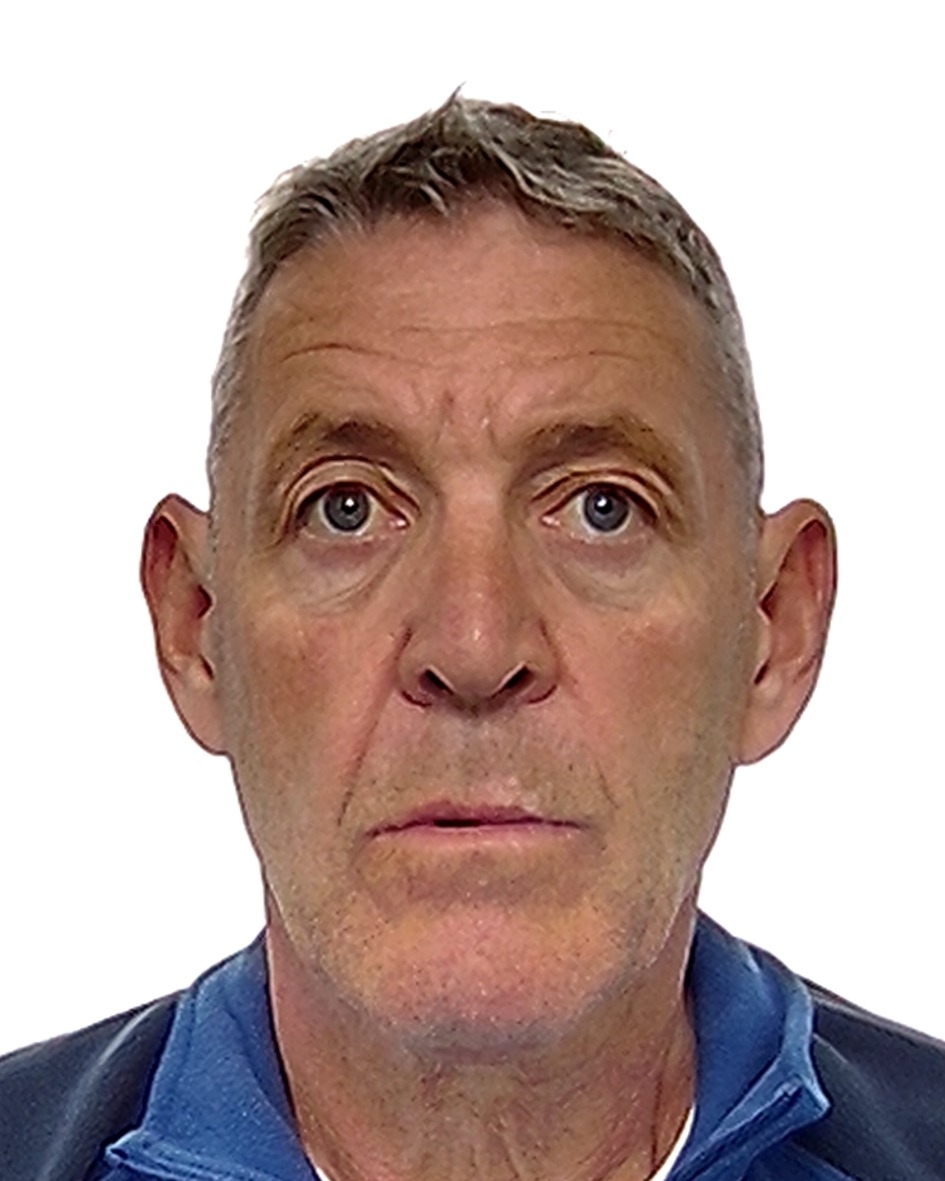
Steven Watson
Founder
Steven Watson is an Associate Professor at the University of Cambridge and Co-Director of EdgeLab. He is also co-founder of the University of Cambridge knowledge-enterprise spinout Cambridge Global Knowledge Nexus, which develops innovative approaches to knowledge, trust, and organisational transformation.
Steven’s research and practice focus on how education, organisations, and societies adapt in times of complexity, disruption, and change. He has a particular interest in the intersection of systems thinking, organisations, business and entrepreneurship, and technology, exploring how knowledge practices and design-led approaches can support resilience and innovation.
With a background in engineering and education, Steven has extensive experience in teaching, research, and organisational consultancy. His approach bridges education, organisational studies, and complex systems science, with a strong emphasis on reflexivity, dialogue, and experimentation.
At EdgeLab, Steven works across disciplinary boundaries to investigate how democratic institutions, educational systems, and businesses can respond to crises of trust, rapid technological change, and shifting social environments. His work emphasises creating sustainable practices of collaboration and transformation at multiple scales—from classrooms and communities to global networks.
Steven is widely published and writes for both academic and general audiences. Selected publications include
- Watson, S. (2023). Autopoietic Ecology: Rethinking Systems, Meaning and Matter (ResearchGate link)
- Watson, S. (2023). Trust and the Crisis of Democratic Communication (Concept note)
- Articles and essays on Meer
- Full academic profile on the University of Cambridge website
Erik Brezovec
Alastair Amos
Collaborator
The research of Alastair Amos illustrates how EdgeLab’s ethos can be enacted within the everyday complexities of a secondary school classroom. Building on a twenty-year career in the financial sector before retraining as a mathematics teacher, Amos brings an unusually reflexive vantage point: attuned both to the systemic logics of institutions and to the lived realities of classroom practice.
His master’s dissertation at the University of Cambridge — Generative AI: Exploring Student Engagement in a Year 11 Mathematics Classroom — developed a theoretically rich account of how dialogic learning can be mediated through generative AI. Drawing on systems theory (Luhmann) and dialogic pedagogical traditions from Pask to Wegerif, the study challenged early “AI-as-tutor” narratives. It highlighted the difficulties students encountered when first asked to use AI dialogically, but also showed how, with appropriate scaffolding, they could engage in recursive meaning-making and reflection. The research identified distinct engagement profiles — from reluctant resisters to dialogic experimenters — and foregrounded how legitimacy, epistemic openness, technical proficiency, and the dynamics of cognitive debt together shaped how students interacted with this emerging technology.
A follow-on project, funded by the British Educational Research Association (BERA), will extend this inquiry into the domain of special educational needs. In this study, Amos will explore how the Autopoietic Ecology Engine — a custom GPT framework — can scaffold both AI literacy and inclusive pedagogy. Rather than treating AI as a tool of convenience, the project will investigate how systemic integration can reshape the ways students with diverse learning needs encounter and inhabit mathematical ideas. By designing lessons where the AE Engine prompts reflection, multiple representations, and contextual explanation, the project will test whether generative AI can act as a mediator of inclusion rather than a source of exclusion.
This approach resonates directly with EdgeLab’s distinction between use and integration. Amos is not simply asking whether SEN students can use AI; he is examining how AI, when structurally coupled with the communicative operations of the classroom, alters what counts as explanation, participation, and success. In doing so, his work reframes the question of “access” in inclusive education: from policy compliance to systemic resonance.
Methodologically, Amos’s research is recursive in both form and substance. By treating generative AI not as a black-box solution but as a dialogic partner that students engage with directly in lessons, he enacts EdgeLab’s commitment to observing how observation itself is constituted. His work thus contributes to EdgeLab’s broader project: cultivating new observational architectures for education, in which legitimacy and meaning are not imposed from outside but emerge through iterative, situated experimentation.
constituted. His work thus contributes to EdgeLab’s broader project:
cultivating new observational architectures for education, in which
legitimacy and meaning are not imposed from outside but emerge
 Cambridge EdgeLab